| Spec | AMD Ryzen 5 7500F | Intel Core i5-13400F |
|---|---|---|
| Cores / Threads | 6 / 12 | 10 / 16 (6P + 4E) |
| Socket | AM5 | LGA1700 |
| Base / boost clock | 3.7 GHz / 5.0 GHz | 2.5 GHz / 4.6 GHz (P-core) |
| TDP | 65W | 65W base / 148W PL2 |
| Integrated graphics | None | None |
| RAM support | DDR5 only | DDR4 or DDR5 (board-dependent) |
| Cheapest new motherboard | ~$130 (B650) | ~$115 (B760, DDR4) |
The two chips, side by side
Search "budget gaming CPU" in 2026 and these two names come up constantly, for good reason: both land in the same rough price bracket, both ship without integrated graphics (so they assume you already have a GPU), and both are the default recommendation in their respective ecosystems — AM5 for AMD, LGA1700 for Intel's last mainstream-value generation before its socket moved on. The catch is that comparing the chips alone hides where the real cost difference comes from.
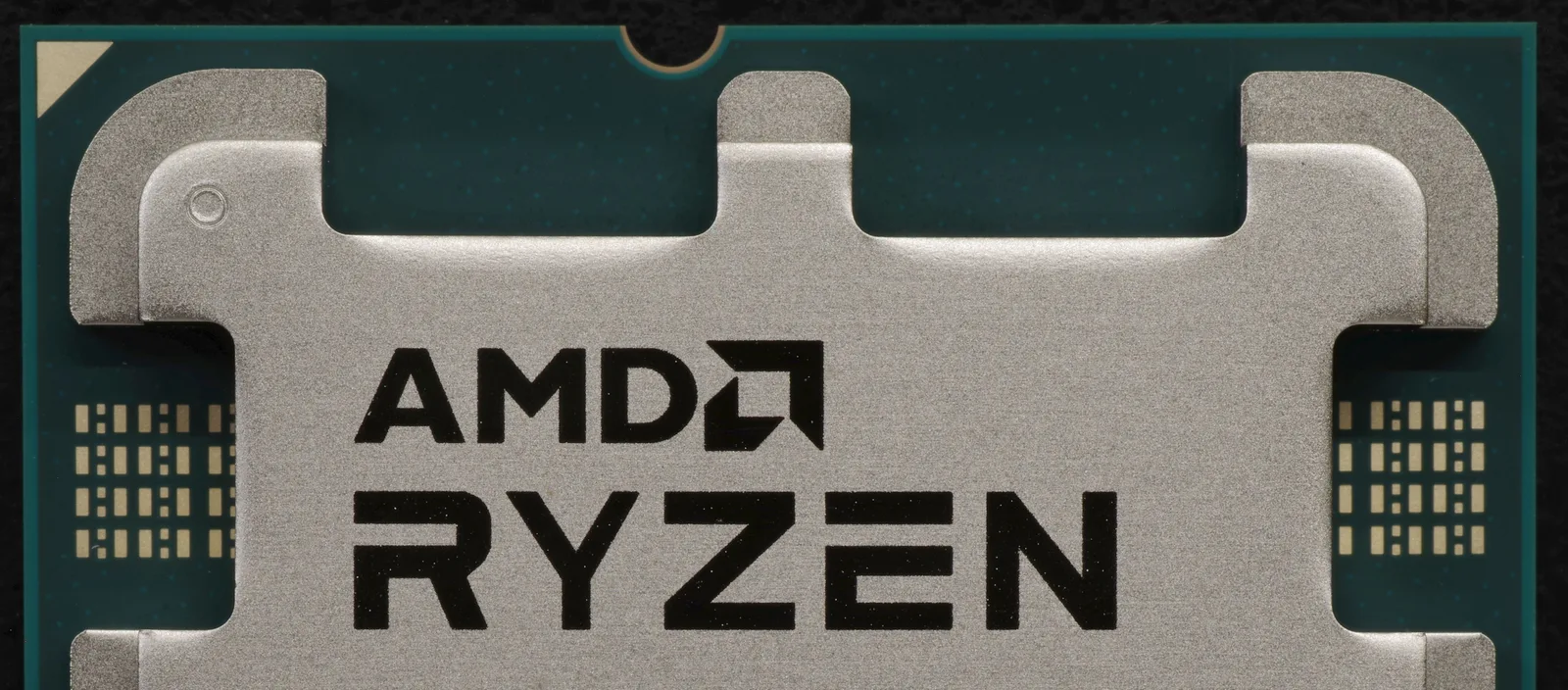
The Ryzen 5 7500F is a 6-core/12-thread Zen 4 part on AMD's current AM5 socket, running 3.7GHz base up to 5.0GHz boost at a 65W TDP. The Core i5-13400F is a hybrid 10-core/16-thread design — 6 performance cores plus 4 efficiency cores — on Intel's LGA1700 socket, base clocks around 2.5GHz on the P-cores with boost up to 4.6GHz, and a higher turbo power ceiling (up to 148W) under sustained multi-core load.
Check Ryzen 5 7500F price on Amazon → · Check Core i5-13400F price on Amazon →
Gaming performance: the 7500F leads, clearly
Aggregated third-party benchmark data across a wide spread of current titles puts the Ryzen 5 7500F ahead of the Core i5-13400F by a meaningful margin at 1080p — the resolution where CPU choice actually matters, since a fast enough GPU will be waiting on the processor rather than the other way around. The gap isn't uniform: it's small in some titles and large in others, but it consistently favors the 7500F rather than swinging both ways.
| Game | 13400F (1080p) | 7500F (1080p) |
|---|---|---|
| Fortnite | ~326 fps | ~453 fps |
| Call of Duty: MW2 | baseline | ~26% higher |
| Far Cry 6 | baseline | ~15% higher |
| Shadow of the Tomb Raider | baseline | ~10% higher |
Extra cores don't automatically win gaming benchmarks — most current game engines still lean on a handful of fast cores rather than spreading load evenly across ten, which is why the 13400F's core-count advantage doesn't translate into a performance lead here.
The part most comparisons skip: platform cost
The chip price alone is misleading. AM5 is a DDR5-only platform — there's no budget DDR4 escape hatch — while LGA1700 still has a healthy stock of B760 boards built around cheaper DDR4 memory. Pricing out a realistic budget build around each chip:
| Ryzen 5 7500F build | Core i5-13400F build | |
|---|---|---|
| CPU | ~$150 | ~$180 |
| Motherboard | ~$130 (B650) | ~$115 (B760, DDR4) |
| 32GB RAM | ~$400 (DDR5-6000, 2026 shortage pricing) | ~$60 (DDR4-3200) |
| Platform total | ~$680 | ~$355 |
Once RAM and motherboard are priced in, the picture flips sharply — and not in AM5's favor. AM5 is DDR5-only, and the 2026 DRAM shortage has pushed a 32GB DDR5-6000 kit to roughly $400, while 32GB of DDR4-3200 for the 13400F's B760 board has stayed close to $60. That's over $300 in platform cost separating two builds whose chips alone are only $30 apart. The 7500F is still the faster chip in nearly every benchmark here — but "faster for about the same money" is no longer an accurate description of this matchup while DDR5 pricing stays this elevated.
Where the 13400F still makes sense
The 13400F isn't a bad chip — it's a genuinely strong value part that predates this comparison being close. It's the right call if a DDR4 kit or a B760 board is already sitting in a drawer, since that removes the platform-cost argument entirely and leaves 4 extra threads that help in lightly threaded productivity work, background streaming/recording, or heavier multitasking alongside a game. It also draws more power under sustained multi-core load, which matters for cramped cases with modest airflow.
Why these numbers are all at 1080p
Every benchmark in this comparison is at 1080p, and that is deliberate rather than convenient.
At higher resolutions the GPU does progressively more work per frame, so it becomes the limit and both CPUs converge — run the same test at 1440p ultra and the two chips look nearly identical. That result is true, and useless for choosing between them, because it measures the graphics card.
Testing at 1080p removes the GPU from the equation and shows what the processor can actually deliver. That matters for two reasons beyond today's frame rate:
- It predicts what happens when you upgrade the GPU. The CPU that is 25% faster at 1080p now is the one that will still be feeding a better card in three years.
- It is the resolution where high-refresh gaming lives. If your target is 144 fps or more in competitive titles, you are in CPU-limited territory whether you play at 1080p or not.
So: read the 1440p convergence as "either chip is fine for a single-GPU-generation build", and read the 1080p gap as "this is the one with a longer runway".
The upgrade path, which the platform table hides
The cost comparison above is accurate for a build assembled this month. It leaves out something that matters over the life of the machine.
AM5 is a live socket. AMD has committed to supporting it for several generations, which means a Ryzen 5 7500F build can take a substantially faster processor later without replacing the motherboard or the memory. That upgrade is a CPU purchase, not a rebuild.
LGA1700 is not. Intel moved on after this generation, so a Core i5-13400F build is at or near the ceiling of what that board will ever accept. A meaningful CPU upgrade means a new motherboard and, because the newer platforms are DDR5, new memory too.
How much that is worth depends honestly on you. If you replace whole machines every five years and never touch the internals, it is worth nothing and you should take the cheaper build today. If you are the kind of buyer who drops in a better CPU halfway through a build's life, it is worth a lot — and it partly offsets the DDR5 premium, because you pay that premium once rather than twice.
When the CPU is not your problem
Before spending anything on either chip, it is worth confirming the processor is the constraint. In budget builds it frequently is not.
Signs the CPU is your limit:
- Frame rate barely changes when you lower graphics settings or resolution.
- Your GPU sits well below 95–100% utilisation during gameplay.
- Stutter appears in busy scenes — large player counts, dense cities, heavy simulation — rather than in visually complex ones.
Signs it is not:
- GPU pinned at 99–100% while the CPU sits at moderate load. That is a GPU limit, and a faster processor changes nothing.
- Stutter that tracks with texture-heavy areas — that is usually VRAM or memory capacity, covered in our 32GB vs 16GB comparison.
A free afternoon with an overlay answers this more reliably than any buying guide, including this one.
What would change this verdict
The conclusion above is tied to one volatile input — DDR5 pricing — so it is worth being explicit about what would flip it back.
If DDR5 returns to anything near its pre-shortage level, the platform-cost argument that currently carries the Core i5-13400F largely disappears, and the recommendation reverts to the Ryzen 5 7500F on straightforward gaming performance plus socket longevity. Nothing about the silicon changes; only the memory bill does.
Current expectations do not put that inside the next year — see our DDR5 pricing update — which is precisely why this comparison reads the way it does today and might not in 2027. A buying guide that never changes its mind when the inputs change is not being consistent, it is being out of date.
Final verdict
This is now a genuinely close call, and which chip wins depends on what you're optimizing for. Pick the Ryzen 5 7500F if raw gaming performance matters most and you can absorb (or already own) the DDR5 cost — it's the faster chip in nearly every benchmark here. Pick the Core i5-13400F if total build cost is the priority: pairing it with a B760 board and a DDR4 kit currently saves upwards of $300 versus a DDR5-only AM5 build — a gap wide enough to fund a better GPU instead. That math will likely swing back toward the 7500F once DDR5 pricing normalizes, but for a build going together in the next few months, don't assume AM5 is the cheaper platform just because the chip itself costs less.
Check Ryzen 5 7500F price on Amazon → Check Core i5-13400F price on Amazon →
// Sources
- CPU specifications — AMD and Intel official product pages
- Gaming benchmark figures — aggregated from published third-party CPU test suites across 100+ titles, not tested by RigCrate on this exact configuration
- Motherboard and memory pricing — major US retailer listings, Sep 2026 snapshot; component prices move fast, confirm before buying
The 7500F is still the faster gaming chip, but the 2026 DDR5 shortage flips the platform-cost argument: a full AM5 build now runs roughly $300+ more than a DDR4-based 13400F build once 32GB of memory is priced in. Pick the 13400F/DDR4 platform if total cost matters most right now; pick the 7500F if you're reusing existing DDR5 memory, building once prices normalize, or performance matters more than platform cost.
Wins on
- Faster in the large majority of gaming benchmarks, often by a wide margin
- Cheaper chip in isolation (~$150 vs ~$180)
- Simpler upgrade path — AM5 is AMD's current socket, good for several more CPU generations
Trade-offs
- AM5 is DDR5-only, and the 2026 DRAM shortage makes a full platform ~$300+ pricier than a DDR4-based 13400F build
- 6 cores / 12 threads is thinner for heavy multitasking or light productivity work than the 13400F's 10/16
- LGA1700 + DDR4 stays meaningfully cheaper for as long as the DDR5 shortage lasts